Five myths about AI in backend systems (and what actually works)

Five myths about AI in backend systems (and what actually works)
Mamikon Arakelyan, Senior Backend Engineer
After 18 years of writing backend code and the last few years experimenting with AI integration, I've noticed something interesting. Most of what engineers believe about AI in production systems is either outdated or flat-out wrong. These misconceptions aren't harmless — they stop teams from using AI where it genuinely helps, or push them toward AI where it makes things worse.
I want to walk through five myths I used to believe myself, explain why they're wrong, and share what I've learned actually works. No hype, no academic theory — just practical experience from real systems handling real traffic.
Myth #1: You need a data science team to use AI
This is the biggest barrier I see. Engineers assume AI requires specialized PhDs, custom infrastructure, and months of preparation. So they never start.
The reality? Most useful AI in backend systems is embarrassingly simple.
Let me give you an example. I had a system where certain database queries would occasionally become slow — taking seconds instead of milliseconds. Classic problem. Traditional solution: add more indexes, optimize queries, throw hardware at it.
The AI solution: train a basic classifier to predict which queries will be slow before they run. I used a random forest — literally a technique from the 1990s. Training data came from existing logs. The whole thing took a week to build, including learning the basics.
Result: 70% of slow queries identified in advance, automatically routed to a replica database. Problem solved with a model any backend engineer could build.
You don't need a data science team. You need curiosity and willingness to experiment. The tools are mature enough that basic Python knowledge is sufficient. scikit-learn, a few tutorials, and your existing logs — that's the starting kit.
The sophisticated stuff comes later, if ever. Most production AI I've seen uses techniques that were well-established a decade ago. The innovation isn't in the algorithms — it's in applying them to the right problems.
Myth #2: AI models are black boxes you can't trust in production
I hear this constantly: "We can't use AI because we need to understand what's happening. What if something goes wrong?"
Fair concern. Wrong conclusion.
First, not all models are black boxes. Decision trees are completely transparent — you can literally print the logic and read it. Linear models show you exactly which factors matter and by how much. Even random forests can be interpreted with feature importance scores.
The truly opaque models — deep neural networks with millions of parameters — are rarely necessary for backend optimization. I've never needed one for the problems I solve. Simpler models work fine and you can actually understand them.
Second, "understanding" is relative. Do you understand every line of code in your ORM? Every optimization in your database engine? Every packet routing decision in your network stack? Of course not. You trust them because they've proven reliable.
AI models earn trust the same way: through testing, monitoring, and gradual rollout. Start with shadow mode — the model makes predictions but doesn't act on them. Compare predictions to reality. When accuracy is acceptable, let it influence non-critical decisions. Expand scope as confidence grows.
The systems I've built always have fallbacks. If the model fails or confidence is low, traditional logic takes over. The AI is an optimization layer, not a replacement for working code. This approach has never caused a production incident for me.
Myth #3: You need massive datasets to train useful models
"We don't have enough data for machine learning."
How much do you think you need? Millions of examples? Billions?
For most backend optimization tasks, a few thousand examples are plenty. Sometimes a few hundred work. The query classifier I mentioned? Trained on three months of logs — about 50,000 examples. The cache optimizer? Even less, because the patterns were clearer.
The confusion comes from headlines about GPT and image recognition. Those models need enormous datasets because they're learning incredibly complex things — human language, visual concepts. Backend optimization is simpler. You're learning patterns like "queries with these characteristics at this time of day tend to be slow." That doesn't require billions of examples.
What you need is relevant data, not massive data. A thousand examples that accurately represent your problem beat a million examples of something slightly different.
And here's the thing: you probably already have the data. Logs, metrics, traces — backend systems generate enormous amounts of information. You're just not using it for learning yet. The data collection infrastructure already exists. You just need to start feeding it to models.
One caveat: data quality matters more than quantity. I've wasted weeks on models that failed because the training data was inconsistent or had subtle bugs. Clean your data first. Verify it makes sense. Then train models.
Myth #4: AI is about replacing human decision-making
This framing — AI versus humans — misses the point entirely.
The best AI integrations I've built don't replace human decisions. They handle the decisions humans shouldn't be making in the first place.
Think about auto-scaling. Traditional approach: set thresholds. If CPU exceeds 80%, add a server. If it drops below 30%, remove one. Simple rules, human-defined.
The problem: optimal scaling depends on dozens of factors interacting in complex ways. Time of day, day of week, recent traffic patterns, memory usage, queue depths, external API latencies, upcoming scheduled jobs. No human can process all of this in real-time and make optimal decisions every few seconds.
AI doesn't replace the human here. It handles a task that was always too complex for real-time human decision-making. The human still defines the goals, sets the constraints, monitors the outcomes, and intervenes when something unusual happens.
I think of it like cruise control in a car. The AI handles the tedious, constant adjustments. The human handles navigation, unusual situations, and overall direction. Neither is replacing the other — they're handling different parts of the job.
Where I've seen AI integration fail is when teams try to automate decisions that genuinely require human judgment. Architecture choices, trade-offs between competing priorities, understanding why a metric matters — these need humans. AI should handle the repetitive, data-heavy decisions that free humans for the interesting work.
Myth #5: Getting AI into production is the hard part
Engineers often think the challenge is building and deploying the model. Get it running in production, and you're done.
Completely backwards.
Deploying a model is straightforward. Export it, wrap it in an API, hook it into your system. A few days of work, maybe a week for proper infrastructure.
Keeping the model useful over time? That's the actual challenge.
Models decay. The patterns they learned gradually become less relevant. User behavior shifts. System architecture evolves. External factors change. A model trained six months ago might be making predictions based on a world that no longer exists.
I've learned this the hard way. A cache prediction model that worked beautifully started making bizarre recommendations. Took me a while to figure out why: we'd launched a new feature that changed access patterns. The model was still optimizing for the old patterns.
Sustainable AI in production requires:
Continuous monitoring. Track prediction accuracy, not just system health. If accuracy drops below threshold, alert. I treat model monitoring as seriously as application monitoring.
Regular retraining. Models need fresh data. I typically retrain monthly, sometimes weekly for fast-changing patterns. Automated pipelines help — manual retraining doesn't scale.
A/B testing for model changes. Don't just deploy new models blindly. Run them against the previous version. Make sure the new one is actually better.
Graceful degradation. When models fail or become unreliable, systems should fall back to working traditional logic. Never let a model failure cascade into a system failure.
This operational overhead is why simple models beat complex ones. A simple model that you can monitor, debug, and retrain easily is worth more than a sophisticated model that's a black box.
What I'm focused on now
These days I'm deep into what I call "intelligent infrastructure" — backend systems designed to learn and adapt from day one.
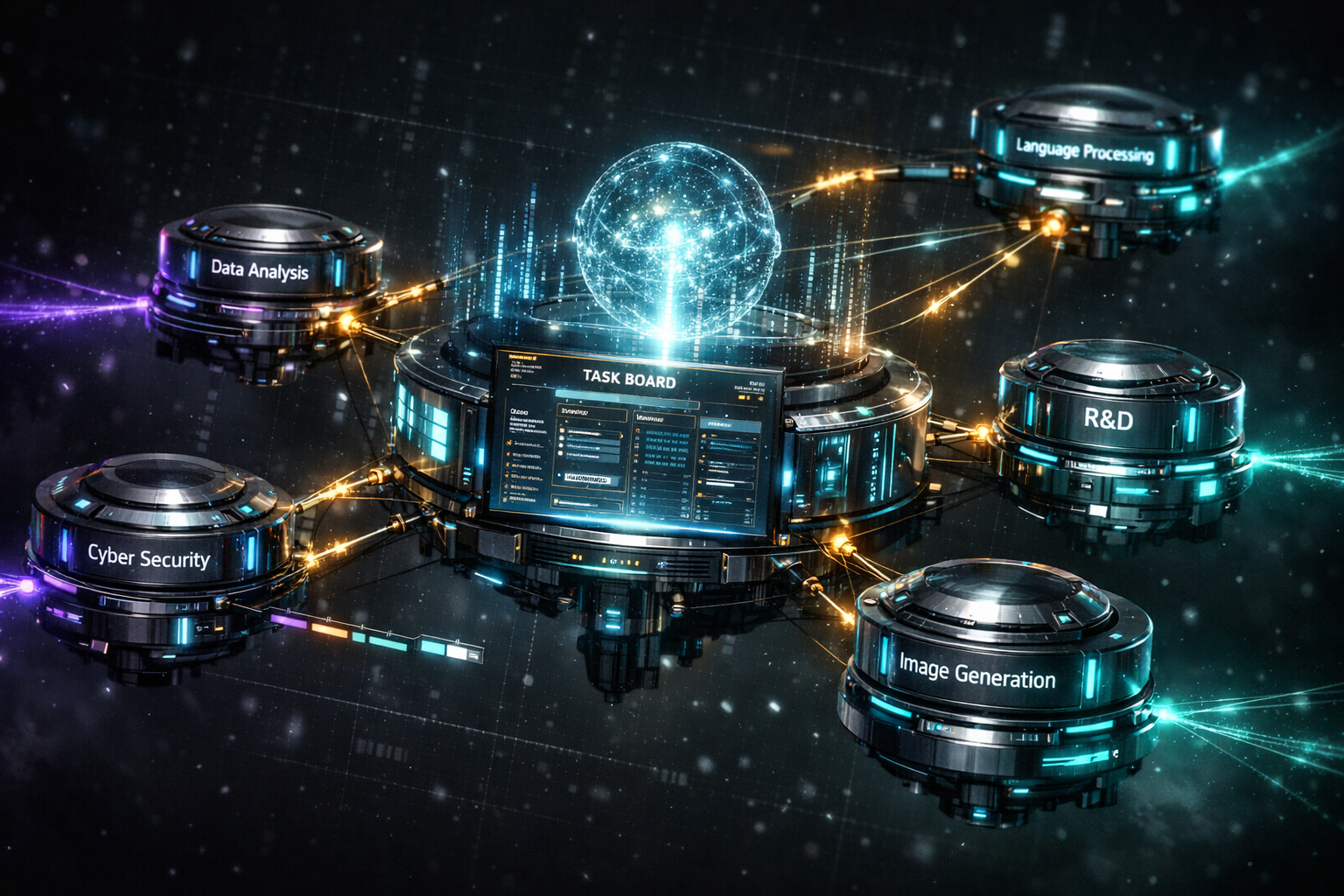
My current focus is building microservices architectures with embedded intelligence. Not AI bolted on afterward, but learning capabilities woven into the core design. Routing layers that discover optimal paths. Queue systems that predict load and adjust priorities. Storage services that anticipate access patterns before requests arrive.
I'm also spending a lot of time on real-time anomaly detection in Go. The challenge is running ML inference fast enough to not add meaningful latency. ONNX Runtime has been my go-to solution — train models in Python's rich ecosystem, deploy in Go for production performance.
The broader direction I see: backend systems becoming self-optimizing by default. Not science fiction — practical improvements using techniques that exist today. The engineer's role shifts from constant tuning to setting goals and handling edge cases. More interesting work, less staring at dashboards.
Three things to try this week
If you're a backend engineer curious about AI, don't wait for a perfect opportunity. Start with something small:
First, export a month of your slowest queries with their characteristics — time of day, query structure, concurrent load. Feed them into a basic classifier. See if you can predict slow queries. Even 50% accuracy is useful if you can route those queries differently.
Second, look at your cache hit rates by hour. Is there a pattern? Can you predict which keys will be requested in the next hour based on the current hour? Pre-warming caches based on predictions often yields quick wins.
Third, review your alerting thresholds. Are they static numbers someone set years ago? Could a model that learns normal patterns catch anomalies better than fixed thresholds?
None of these require a data science background. They require curiosity, existing logs, and a willingness to experiment. Start there. See what happens.
Mamikon Arakelyan specializes in backend architecture, microservices design, and practical AI integration for production systems. With over 18 years of experience across PHP, Go, and distributed systems, he currently focuses on building intelligent infrastructure that learns and adapts automatically.
Related posts