AI agents in product development: What changed in twelve months
AI agents in product development: What changed in twelve months
Elena Voronova, Product Lead
A year ago, AI agents were a curiosity. Interesting demos, impressive Twitter threads, but nothing you'd trust with actual work. Today my team runs three autonomous agents that handle tasks we used to spend hours on. The shift happened faster than anyone predicted, and the lessons weren't what I expected.
January: The skepticism phase
When I first heard "AI agents" I pictured science fiction — autonomous systems making decisions, potentially going rogue. The reality was much more mundane. Early agents were essentially chatbots with tool access. They could search the web, run code, maybe send an email. Impressive for demos, unreliable for production.
My team tried using an agent for competitive research. The idea was simple: monitor competitor websites, summarize changes, flag important updates. It worked about 40% of the time. The other 60% produced hallucinated features, missed obvious changes, or got stuck in loops. We shelved the project.
April: The first real use case
Three months later, a colleague showed me something different. Not a general-purpose agent, but a narrow one built for a single task: processing customer feedback. It read support tickets, categorized them, extracted feature requests, and compiled weekly summaries.
The key insight: constraints made it work. The agent couldn't browse the web or make external calls. It only processed our data, using our categories, following our templates. Within tight boundaries, it performed reliably — maybe 85% accuracy. Good enough to save our support lead ten hours per week.
We deployed it quietly, with human review on outputs. Nobody complained. The summaries were actually better than what we'd been producing manually — more consistent, less biased by whoever happened to review tickets that week.
July: Scaling carefully
Success with feedback processing gave us confidence to try more. We built a second agent for user research synthesis. After interviews, it would transcribe recordings, extract key quotes, identify patterns across sessions, and draft initial findings documents.
This one required more iteration. Research synthesis needs nuance that ticket categorization doesn't. Our first version missed emotional subtext, over-indexed on frequently mentioned topics, and produced generic insights. We spent a month refining prompts, adding examples, building better evaluation criteria.
The breakthrough came when we stopped trying to automate the whole process. Instead of generating final reports, the agent now produces structured raw materials — organized quotes, preliminary themes, contradictions to investigate. Researchers use these as starting points, not finished products. Hybrid workflow, not full automation.
October: The agent that surprised us
By fall, we'd internalized a pattern: narrow scope, human oversight, iterative refinement. Then we tried something ambitious — an agent for roadmap prioritization.
This agent ingested customer feedback summaries, usage analytics, competitor updates, and engineering estimates. It scored potential features on impact, effort, and strategic alignment, then produced ranked recommendations with reasoning.
I expected it to fail. Prioritization feels inherently human — balancing stakeholder politics, reading between lines of customer requests, making judgment calls about market timing. How could an agent handle that?
It couldn't, not fully. But it did something valuable: it made our assumptions explicit. When the agent ranked a feature differently than we would, we had to articulate why. Often, we realized our intuition was based on outdated information or personal bias. Sometimes the agent was simply right.
We don't let it make final decisions. But it transformed prioritization from a gut-feel exercise into a structured debate. The quality of our roadmap discussions improved dramatically.
December: What actually matters
Looking back at twelve months, a few lessons stand out.
First, narrow beats general. Every successful agent we built does one thing well. The failed experiments tried to be flexible and capable. Constraints aren't limitations — they're what make reliability possible.
Second, hybrid workflows outperform full automation. The goal isn't replacing humans but restructuring how humans spend time. Our researchers still do research. They just start with better raw materials. Our product team still prioritizes. We just have clearer inputs to the discussion.
Third, evaluation is everything. An agent without clear success metrics is just an expensive toy. We spent as much time building evaluation frameworks as building agents themselves. How do you measure if a summary is good? What makes a categorization correct? These questions forced clarity about what we actually wanted.
Fourth, trust builds slowly. Every agent started with 100% human review. As accuracy proved consistent, we relaxed oversight gradually. Some agents still get full review. Others we spot-check weekly. The appropriate level depends on consequences of errors, and we're conservative by default.
What's next
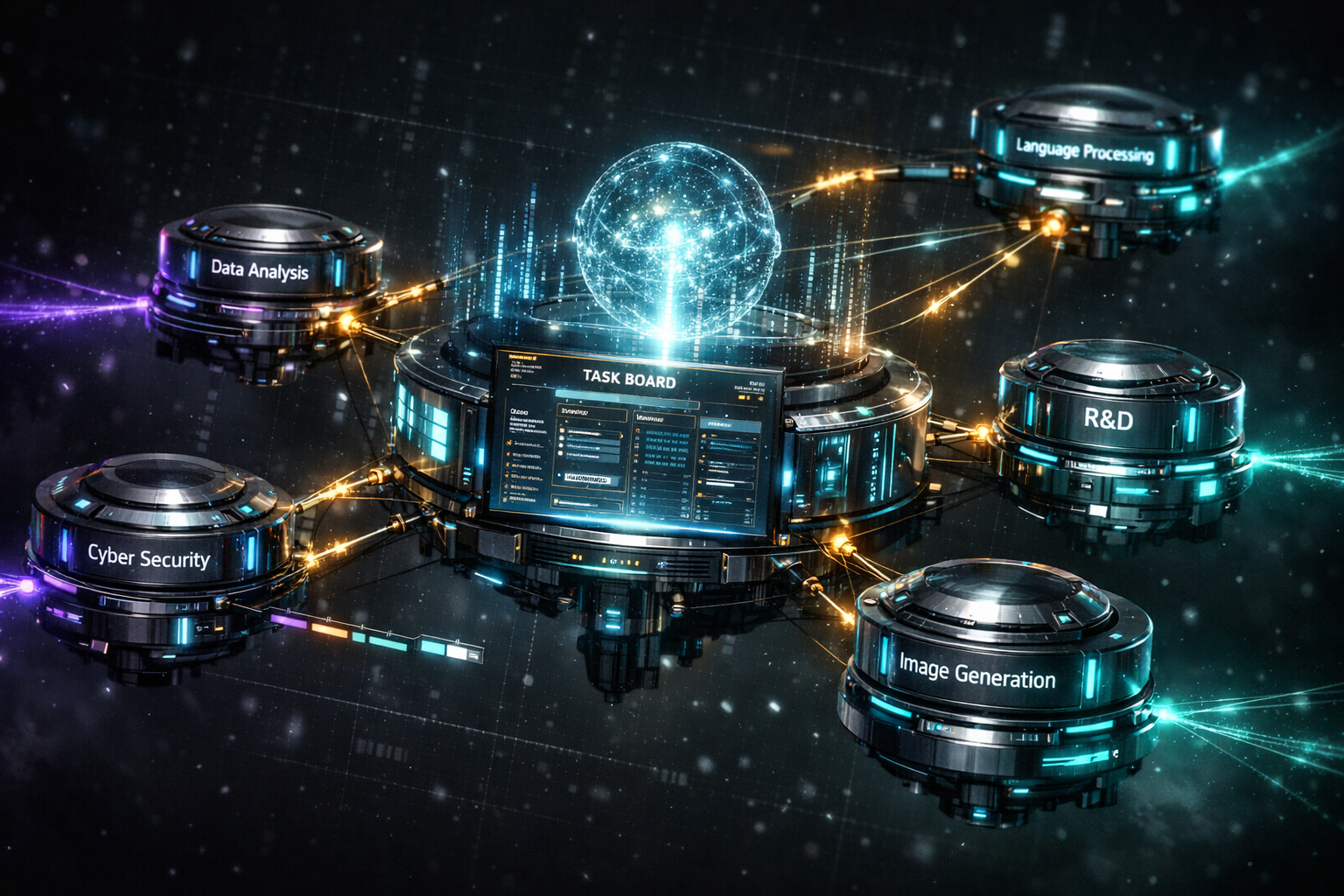
We're now exploring agents that work together — outputs from one feeding into another. The feedback agent's summaries go to the prioritization agent. Research synthesis informs competitive analysis. Small autonomous systems, loosely joined.
I don't know if this leads to something transformative or hits a ceiling. The progress over twelve months was real but incremental. We're more efficient, not revolutionized. Maybe that's the realistic trajectory — steady productivity gains rather than dramatic disruption.
What I do know: the teams that started experimenting a year ago have compounding advantages now. The learning curve is real, and there's no shortcut. If you're still watching from the sidelines, the best time to start was six months ago. The second best time is this week.
Elena Voronova leads product at a B2B SaaS company, where she focuses on integrating AI capabilities into existing workflows. She writes about practical applications of emerging technology.
Related posts