Your Brand Exists. But Does AI Know About It?
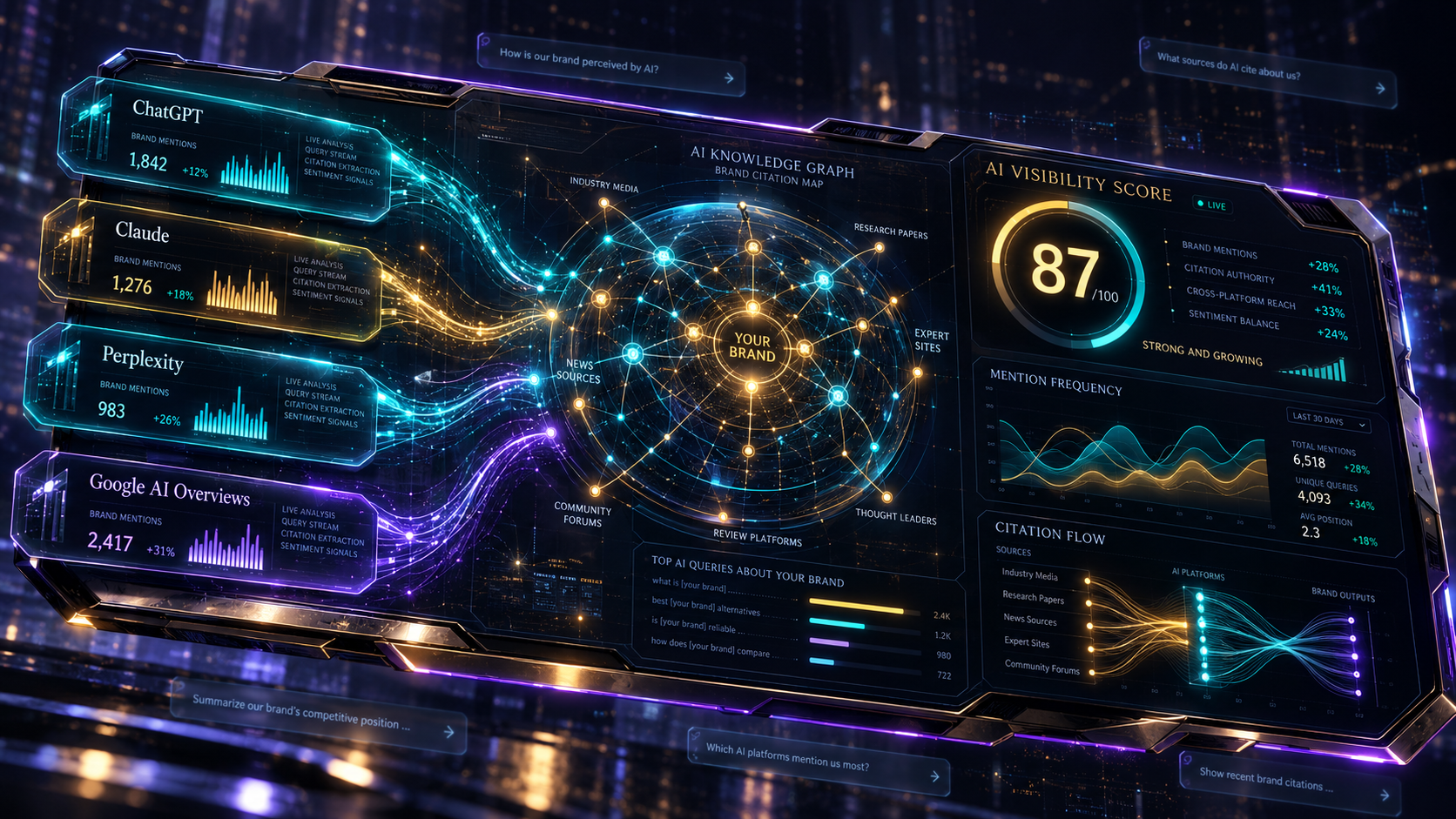
Your Brand Exists. But Does AI Know About It?
Alexander Churilov, CEO of ISEO, Skolkovo Resident
For twenty years, we optimized for Google. We learned the rules, mastered the algorithms, built entire industries around ten blue links on a search results page.
That era is ending.
The new interface between humans and information is not a list of links. It is a conversation. ChatGPT, Claude, Perplexity, Google AI Overviews - these systems do not rank websites. They synthesize answers. They recommend. They decide.
And most brands have no idea whether they exist in that world at all.
The invisible crisis
Ask ChatGPT to recommend a CRM system. Ask Claude for the best project management tool. Ask Perplexity which marketing agency to hire.
Now ask yourself: is your company in those answers?
Most businesses cannot answer this question. They have elaborate SEO dashboards tracking every keyword ranking on Google. They monitor social mentions, review scores, media coverage. But they have zero visibility into how AI systems perceive and represent their brand.
This is not a minor gap. This is a fundamental blind spot in modern brand management.
Because AI systems are not simply another channel. They are becoming the primary interface through which people discover, evaluate, and choose products and services.
From SEO to GEO
Traditional Search Engine Optimization focused on ranking - getting your website higher in a list of results.
Generative Engine Optimization is fundamentally different. The goal is not ranking. The goal is citation - being selected by the AI as a relevant, authoritative source when it constructs its answer.
The mechanisms are different. The signals are different. The optimization strategies are different.
In SEO, you competed for position. In GEO, you compete for presence.
The question is no longer where you rank. The question is whether you exist in the AI's understanding of your category at all.
What determines AI visibility?
After two decades building SEO systems and three years developing AI-powered marketing tools at Skolkovo, I have identified the core factors that determine whether a brand appears in AI-generated responses.
First: structured, citable content. AI systems prefer sources that present information in formats they can easily extract and reference. Technical documentation, research papers, definitive guides, structured data - these are the building blocks of AI citation.
Second: third-party authority signals. AI systems weight mentions in credible external sources heavily. Media coverage, industry publications, expert references, Wikipedia presence - these signals establish a brand as legitimate and citeable.
Third: consistency across the knowledge graph. AI systems cross-reference information. Contradictory data, outdated information, inconsistent naming - these create uncertainty that reduces citation likelihood.
Fourth: topical relevance and expertise demonstration. AI systems attempt to match queries with authoritative sources. Demonstrable expertise through depth of content, specialized knowledge, and domain-specific authority increases selection probability.
The measurement problem
You cannot optimize what you cannot measure.
Traditional analytics tell you nothing about AI visibility. Google Analytics tracks website visits, not AI citations. SEO tools track search rankings, not generative engine responses.
Measuring AI visibility requires a different approach: systematic querying of multiple AI platforms across relevant prompts, tracking brand mention frequency, analyzing sentiment and accuracy of brand representations, monitoring competitive positioning within AI responses.
This is not simple. AI responses vary by user, by time, by phrasing. They are non-deterministic. They evolve as models are updated and retrained.
But the complexity does not eliminate the necessity. Brands that cannot measure their AI presence cannot manage it.
The competitive window
Right now, most companies are ignoring AI visibility entirely. They continue optimizing for traditional search while the ground shifts beneath them.
This creates a window - a temporary competitive advantage for brands that move early.
AI systems are being trained on current data. The brands establishing authority now, generating citable content now, building third-party signals now - these are the brands that will be embedded in the knowledge base of tomorrow's AI systems.
Once that knowledge is established, it becomes self-reinforcing. AI systems cite authoritative sources. Being cited establishes authority. The rich get richer.
The brands that wait will find themselves starting from zero in a game where their competitors have already won.
What this means for marketing
AI visibility is not a replacement for traditional marketing. It is a new layer that must be integrated with existing strategies.
Content strategy must evolve to prioritize citable, structured content alongside engagement-focused material.
PR and media relations must consider AI training data as a key outcome, not just immediate audience reach.
Technical SEO must expand to include structured data optimization for AI extraction.
Brand monitoring must incorporate systematic AI visibility tracking across multiple platforms.
And perhaps most importantly: marketing teams must accept that they no longer fully control how their brand is represented. AI systems will describe your brand whether you participate in shaping that description or not.
The question every brand must answer
In six months, a potential customer will ask an AI assistant to recommend a solution in your category.
Will your brand be in that answer?
If you do not know, you have work to do.
Alexander Churilov is the CEO of ISEO, a top-3 SEO company in Russia and Skolkovo Innovation Center resident. He has 20+ years of experience in digital marketing and has developed AI-powered marketing automation systems including the patented iSEO PRO platform. He is currently building AI visibility monitoring and optimization infrastructure for the U.S. market.
Related posts