Why cryptocurrency is no longer anonymous
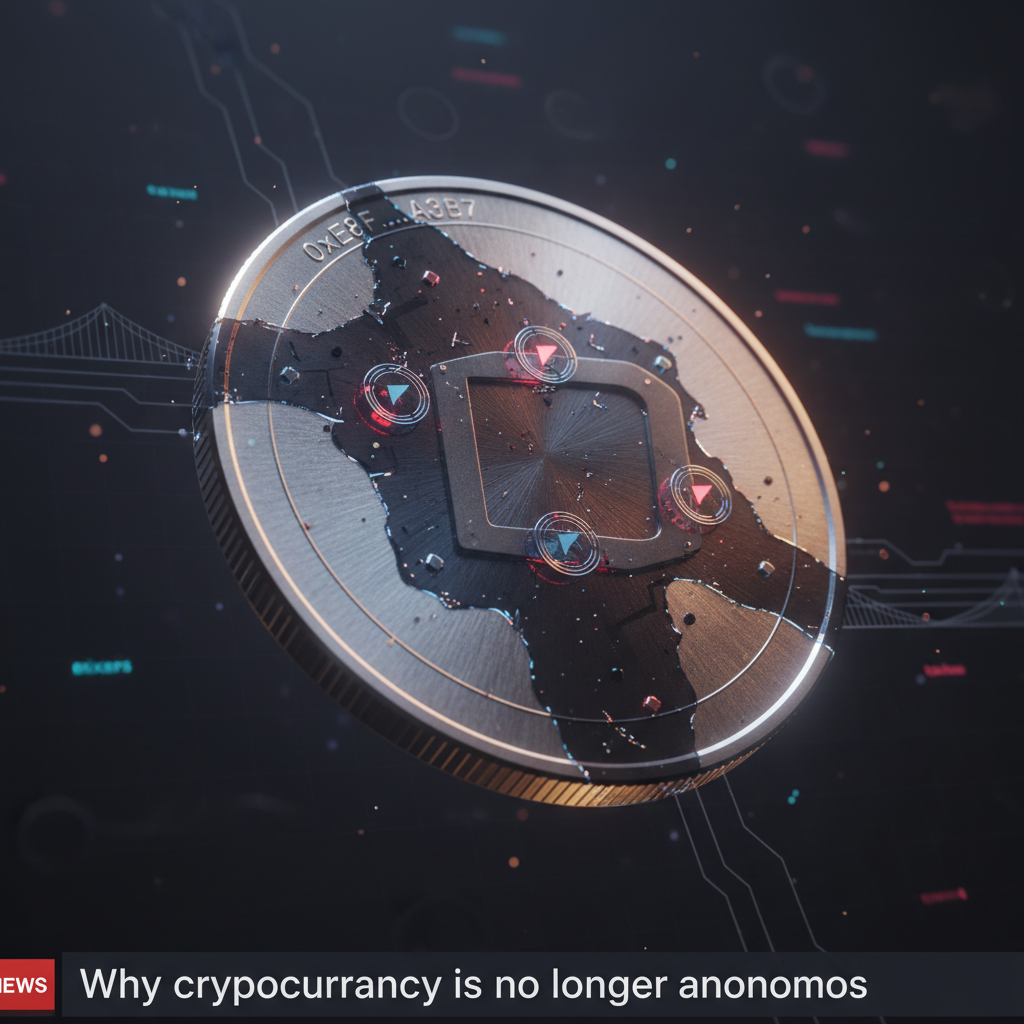
Why cryptocurrency is no longer anonymous
Your stablecoins and other tokens can be retroactively classified as illicit, even after long periods of inactivity on a wallet.
How retroactive tainting happens
Authorities or analytics firms may mark past transactions as suspicious when a counterparty later becomes sanctioned or linked to crime.
This process can turn otherwise dormant USDT balances into assets considered "dirty" based on new information about counterparties.
Tether, sanctions and tracked addresses
Cases discussed include law enforcement and compliance actions where exchanges or services were later sanctioned and historical flows were reclassified.
Examples referenced involve Iranian-linked addresses that attempted to avoid detection but were identified by transaction monitoring over time.
Mixers, bridges and custodial risks
Using mixers or cross-chain bridges is presented as a high-risk approach rather than a reliable remedy for tainted funds.
These tools can create identifiable patterns and central points of failure that complicate legal compliance and forensic analysis.
Exchanges and banking-like functions
Large trading platforms increasingly perform roles similar to banks by holding custody, managing compliance and interacting with regulators globally.
That evolution has consequences for user privacy and the regulatory treatment of on-platform assets across jurisdictions.
Chainalysis valuation and law enforcement links
The analytics firm Chainalysis is noted with a valuation of $8 B and longstanding work on darknet marketplaces such as Silk Road.
Speakers also pointed out that a substantive share of the firm's staff previously served in law enforcement or government agencies.
Regulatory acceleration and local responses
Russian regulatory changes were accelerated this year, according to the discussion, reflecting broader international pressure on crypto compliance.
Faster rulemaking aims to close gaps that enable retroactive tainting and to align domestic practice with global enforcement priorities.
Custody practices shared by an industry founder
The founder of BitOK, an AML service, described personal custody choices and explicitly stated avoidance of multisig schemes and cold wallets.
No technical how-to guidance was provided; the comments were positioned as one expert’s operational preference rather than prescriptive advice.
Related posts